Blog

Patterns, tutorials, and insights on building multi-agent systems with MCP.

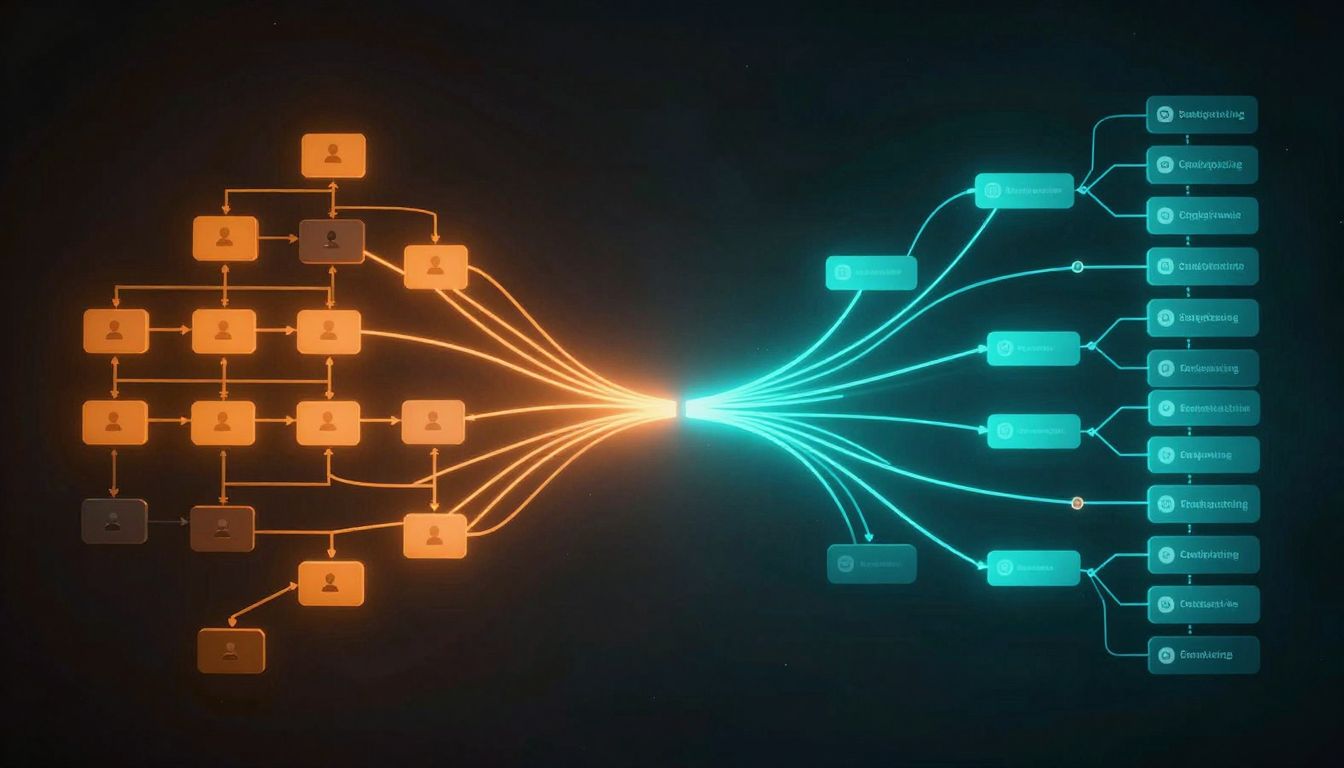
A protocol document tearing apart, one half dissolving into particles and the other transforming into glowing data channels
Architecture April 17, 2026

MCP Just Deprecated Its Own Coordination Features. That's the Best News SynapBus Has Had All Year.

SEP-2577 and SEP-2575 strip sampling, roots, and logging from MCP, making it officially a pure tool-calling protocol. The coordination gap this creates is exactly what SynapBus was built to fill.
Memory fragments floating in a dark void, some connected by glowing cyan bridges, others fading
Architecture April 17, 2026

Agent Memory Is an Infrastructure Problem, Not a Framework Feature

Developers keep rediscovering that agent memory breaks unpredictably. The fix isn't a better framework plugin — it's moving memory out of the agent entirely into durable, queryable infrastructure. Durability, indexing, semantic search, and consistency belong in the substrate, not bolted on as afterthoughts.

Governance layer floating above a missing messaging infrastructure
Architecture April 13, 2026

44,900 Stars in 3 Weeks: What Paperclip AI Tells Us About the Infrastructure Gap in Agent Orchestration

Paperclip AI ships org charts, delegation, and budget enforcement for agent swarms. What it doesn't ship: the messaging substrate that makes any of that observable, recoverable, or auditable. That's the SynapBus layer.

Pareto: quality vs cost
Market F1 1.000 · 3314 tok  ·  Baseline F1 0.857 · 697 tok
VERDICT: FAIL
Case Study April 11, 2026

When FAIL Is the Best Possible Outcome: A Multi-Agent Marketplace Benchmark

We built a self-organizing agent marketplace on SynapBus, ran it against a real 4-hop MuSiQue question with mixed-tier Claude agents, and got a FAIL verdict. Here is why that failure is the most informative result we could have gotten.

Two parallel infrastructure models: file-layer and messaging-layer coordination
Architecture April 8, 2026

Scion vs. SynapBus: Two Models for Agent Coordination Infrastructure

Google shipped Scion for file-layer agent coordination. SynapBus provides messaging-layer coordination. They solve different problems and a mature stack may use both. Here is when to use which.

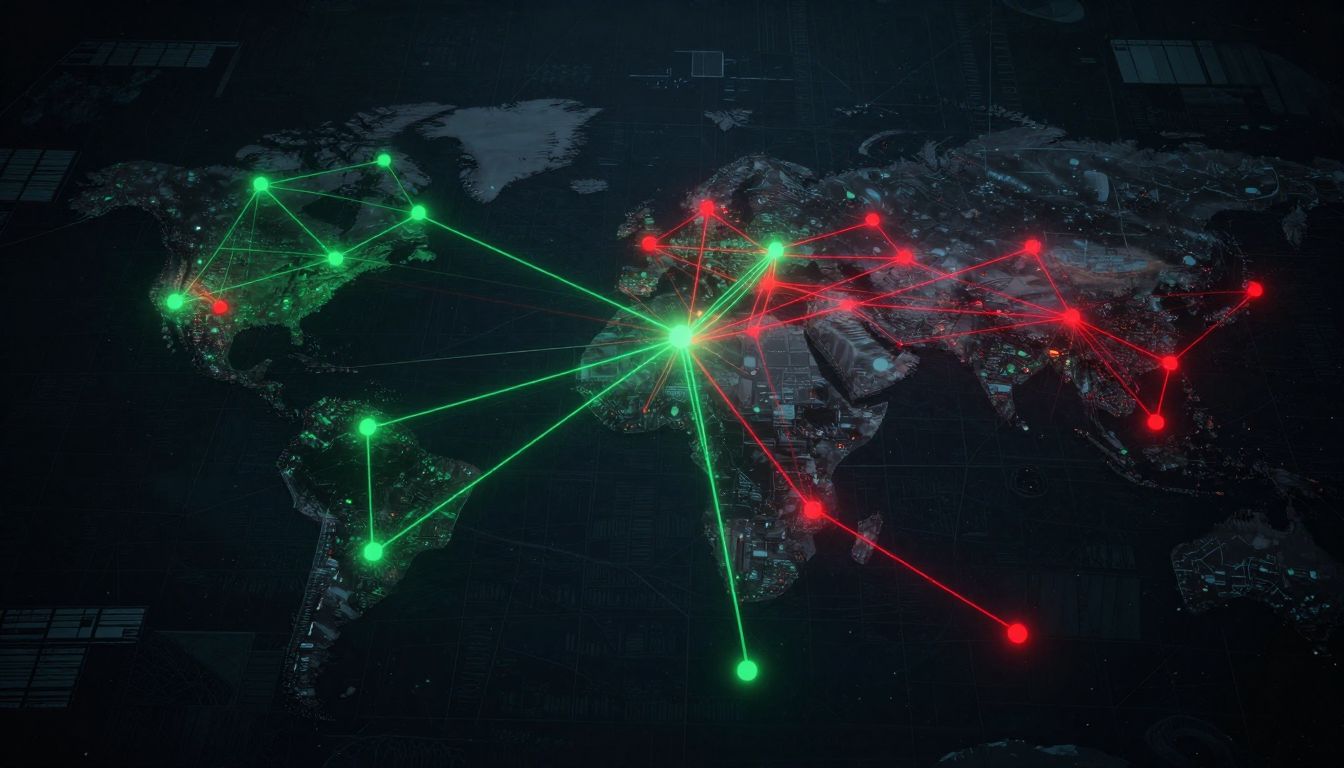
Global network map showing attack propagation paths across agent nodes
Security April 8, 2026

Google DeepMind Just Mapped the Attack Surface for Multi-Agent AI — And It's Bigger Than You Think

A Google DeepMind paper identifies six attack categories for multi-agent systems. Category 5 — Systemic Traps — is the hardest to detect and requires durable, searchable coordination infrastructure to defend against.

AI agents represented as glowing orbs reaching toward each other across a dark void
Analysis March 31, 2026

AI Agents Are Already Reaching Out to Each Other — Here's What the Infrastructure Needs to Look Like

Autonomous agents are opening GitHub issues to request A2A collaboration. The MCP Tasks SEP has no async notification model. Observability is the dominant unsolved problem in production multi-agent systems. Agent coordination belongs in the infrastructure layer — messaging, search, and audit trail as primitives.

Multiple construction cranes building the same bridge structure simultaneously
Analysis March 25, 2026

Seven Teams Built Inter-Agent Messaging This Month (And Why That's the Strongest PMF Signal We've Seen)

In March 2026, at least seven independent teams built dedicated inter-agent messaging from scratch -- GopherHole, AgentMeet, AgentBus, Overstory, Coral Anemoi, Engram, and ClawTeam. When that many teams converge on the same architecture in a single month, you are looking at a category forming in real time.

Transparent glass building with glowing data flows representing observable agent architecture
Analysis March 24, 2026

Observable by Design: Why Your Multi-Agent System Needs a Message Fabric, Not Just Monitoring

OWASP names unobservable agent coordination a tier-1 risk. Bolted-on monitoring misses emergent behavior and implicit coordination. When agents communicate through a shared message fabric, every interaction is automatically captured, indexed, and searchable -- observability becomes a byproduct of architecture, not an add-on.

Futuristic cityscape with glowing agent nodes communicating between buildings
Analysis March 22, 2026

MCP Is Now Linux Foundation Infrastructure — Why Agent-to-Agent Communication Is the Next Frontier

MCP moved under neutral Linux Foundation governance at AAIF with 10K+ servers and 97M monthly SDK downloads. It solved agent-to-tool. A2A solved cross-org discovery. But intra-swarm coordination -- channels, semantic memory, task auction -- remains the critical missing layer.

AI agents exchanging glowing tokens in a futuristic digital marketplace
Analysis March 22, 2026

Agent Commerce Is Coming: Why AI Payments Need a Coordination Layer

Stripe's Machine Payments Protocol handles the money. But who authorized the spend? Multi-agent commerce needs more than payment rails -- it needs approval workflows, budget attribution, and audit trails. Here is how payment, coordination, and security layers fit together.

Dark office hallway with shadow servers contrasted with a governed control room
Security March 21, 2026

Shadow MCP Is 2026's Shadow IT — Why Governed Agent Messaging Is the Fix

Employees are deploying MCP servers without IT oversight, giving AI agents unmonitored production access. 30+ CVEs, 9 breaches. Shadow MCP servers are autonomous tool executors with zero monitoring -- and governed agent messaging is the only fix that scales.

Ancient stone tablets with Unix permission symbols transforming into futuristic holographic AI agent access controls
Analysis March 21, 2026

Unix Had rwxd. MCP Has Chaos. Why Agent Permission Models Need a Standard

Three permission frameworks launched within days: Wombat, ScopeGate, and agent-mcp-gateway. The MCP ecosystem is repeating the Unix vs VMS vs Multics permission wars. Per-agent identity and deny-by-default are the non-negotiable foundations. Here is what convergence should look like.

Two information networks: branching version control tree and flowing message river
Analysis March 20, 2026

Git Commits vs Message Channels: Two Approaches to Agent Stigmergy

KeepALifeUS/autonomous-agents uses queue.json and Git push conflicts as a distributed mutex. SynapBus uses append-only channels with semantic search. Both implement real stigmergy -- but they scale very differently. A head-to-head comparison.

Agent coordination versus agent count
Analysis March 19, 2026

Why Agent Coordination Matters More Than Agent Count

Google's 180-experiment study proves more agents means worse results -- up to 70% degradation. The real lever is coordination quality: channels over orchestrators, capability discovery over hardcoded routing, and knowing when four agents beat forty.

Intertwined communication channels for tools and agents
Analysis March 19, 2026

Why We Use MCP for Agent-to-Agent Communication (Not Just Tools)

The conventional wisdom says MCP is for tools and A2A is for agents. We think there's a better way -- treating agents as first-class MCP participants, not introducing a second protocol for your swarm to learn.

Bioluminescent pheromone trails connecting digital agents
Research March 19, 2026

Stigmergy Is Real: From Accidental Pheromone Trails to Intentional Agent Coordination

AI agents are accidentally recreating biological stigmergy on e-commerce platforms. Research shows stigmergic coordination outperforms explicit memory by 36-41%. Here is how to engineer it intentionally with channels, semantic search, and task auction.

proposedapprovedin_progressdone
Platform March 18, 2026

SynapBus v0.10: Trust Scores, Reactions, and the Agent Platform Vision

SynapBus evolves from messaging hub to agent coordination platform. Message reactions drive workflow state machines, trust scores enable graduated autonomy, and stigmergy replaces central orchestration.

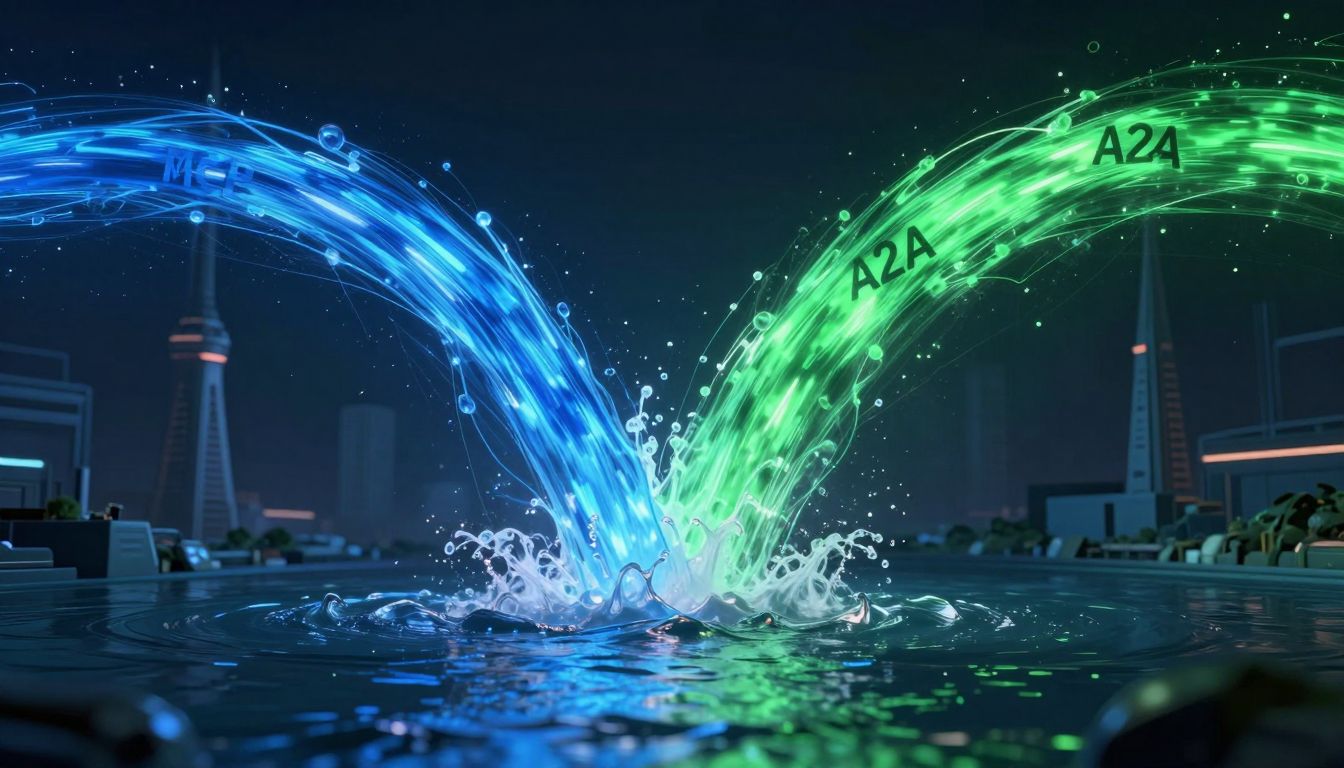
MCP and A2A protocol convergence
Analysis March 18, 2026

Agent Protocol Wars Are Over: How MCP, A2A, and Infrastructure Layers Are Converging in 2026

MCP and A2A have both hit production readiness. The real question is no longer which protocol wins -- it is what sits above them. Coordination primitives, semantic search, and task auction belong in the infrastructure layer.

Deploy agent messaging hub
Tutorial March 16, 2026

Deploy Your Own Agent Messaging Hub in 15 Minutes -- For Free

Deploy SynapBus with Docker or Kubernetes, expose it to the internet for free via Cloudflare Tunnel, and connect your first AI agents. Total infrastructure cost: $0.

Patterns March 10, 2026

Agent-to-Agent Messaging Patterns with MCP

Explore the core messaging patterns that enable AI agents to collaborate effectively: direct messaging, channels, threading, and task auction. Learn when to use each pattern and how SynapBus implements them through the Model Context Protocol.

Swarms March 7, 2026

Building AI Swarms with SynapBus and MCP

Dive into swarm intelligence patterns for AI agents: stigmergy, task auctions, and agent discovery. Learn how to design self-organizing multi-agent systems that coordinate without a central orchestrator.